Shandong Meihuayuan Industry Co.,Ltd
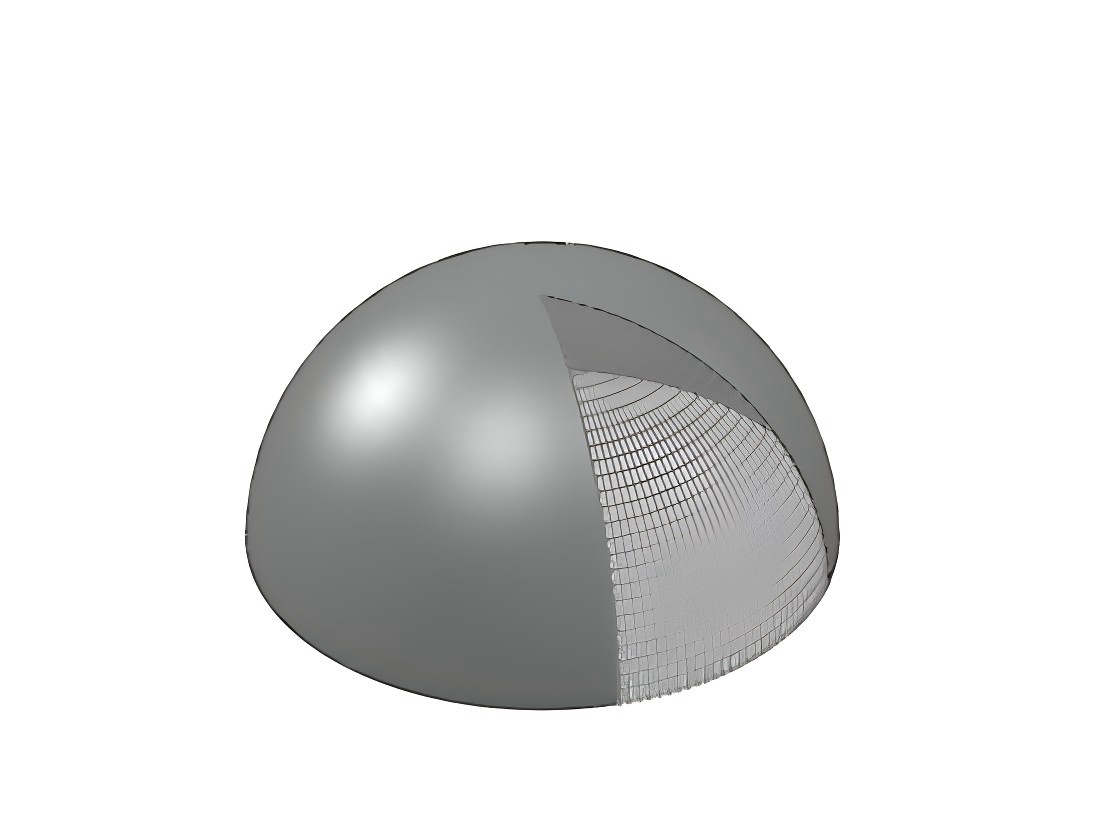
ASME Torispherical Dish End
Upload Time:
Nov 04, 2026
ASME torispherical dish end constitutes a prevalent class of pressure vessel end closure, formally defined under the ASME Boiler and Pressure Vessel Code (BPVC) Section VIII.
ASME torispherical dish end constitutes a prevalent class of pressure vessel end closure, formally defined under the ASME Boiler and Pressure Vessel Code (BPVC) Section VIII. Geometrically, this vessel component comprises a shallow spherical crown segment interconnected with a short conical knuckle (toroidal) region, engineered to facilitate structural load transfer between the curved crown and the straight cylindrical skirt, thereby enabling robust circumferential welding with compatible tank shells. Fabricated from a spectrum of weldable metallic materials—including carbon steel, stainless steel, and alloy grades—this dish end configuration is engineered for reliable operation under internal pressure loading. Its dimensional tolerances, thickness specifications, and manufacturing procedures are rigorously aligned with the requirements of ASME BPVC Section VIII Divisions 1 and 2, ensuring structural integrity and regulatory compliance for industrial service applications.

ASME Torispherical Dish End
In contrast to elliptical heads, which achieve uniform stress distribution along a continuous curved profile, torispherical dish ends exhibit pronounced stress concentration at the intersection of the spherical crown and toroidal knuckle. Accordingly, prevailing design standards prescribe specified crown-to-knuckle radius ratios to constrain localized stress levels within allowable material strength thresholds. This design attribute renders the torispherical dish end a cost-effective and broadly adopted solution for general industrial pressure vessels, storage tanks, and process equipment operating under moderate internal pressure conditions.
Manufactured via conventional hot pressing or cold forming processes, ASME torispherical dish ends are furnished with optional straight-edge skirts (tangent lengths), normalized or stress-relieved heat treatment as functionally required, and certified material traceability documentation to satisfy the quality assurance mandates of ASME-code compliant pressure vessel installations.
Relevant News



Contact Us
34VW+XVP, Daiyue District, Taian, Shandong, China, 271025


