Shandong Meihuayuan Industry and Trade Co.,Ltd
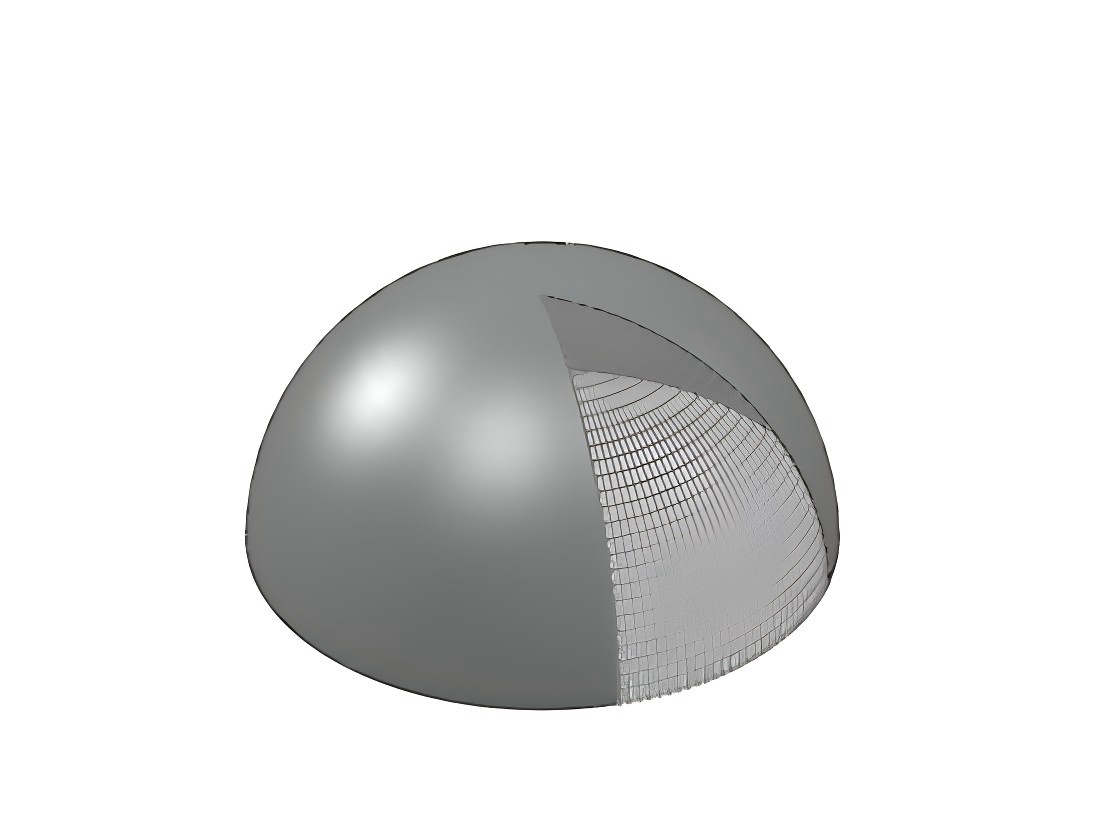
Types of Pressure Vessel Heads: Ellipsoidal, Torispherical and Hemispherical Heads
Upload Time:
Nov 26, 2026
Pressure vessel heads are essential components used to close the ends of pressure vessels, storage tanks, boilers, and other industrial equipment. Their geometry plays an important role in pressure resistance, stress distribution, material requirements, and manufacturing costs.
Types of Pressure Vessel Heads: Ellipsoidal, Torispherical and Hemispherical Heads
Pressure vessel heads are essential components used to close the ends of pressure vessels, storage tanks, boilers, and other industrial equipment. Their geometry plays an important role in pressure resistance, stress distribution, material requirements, and manufacturing costs.
Different head shapes are designed to meet different operating conditions and engineering requirements. Among the most commonly used types are ellipsoidal heads, torispherical heads, and hemispherical heads.
Understanding the differences between these three types can help equipment manufacturers and engineering professionals select the appropriate head for their projects.
1. Three Common Types of Pressure Vessel Heads
There are three typical types of formed pressure vessel heads:
-
Ellipsoidal Heads
-
Torispherical Heads
-
Hemispherical Heads
Each type has a different geometric profile, which affects its mechanical behavior under internal pressure.

1.1 Ellipsoidal Heads
Ellipsoidal heads are widely used in pressure vessels and industrial storage tanks. Their profile follows an elliptical curve, providing a smooth transition between the head and the cylindrical shell.
A commonly used configuration is the 2:1 semi-ellipsoidal head, where the major axis is twice the minor axis.
For a standard 2:1 elliptical head:
-
Major axis: Equal to the inside diameter of the vessel
-
Minor axis: Half of the major axis
-
Head depth: Approximately one-quarter of the inside diameter, excluding any straight flange
The 2:1 elliptical profile provides a practical balance between structural performance, material consumption, and manufacturing requirements.
Ellipsoidal heads are commonly used in chemical equipment, petroleum processing systems, air receivers, and industrial pressure vessels.

1.2 Torispherical Heads
Torispherical heads, also known as flanged and dished heads, consist of two main curved sections:
-
Crown: The main central dish-shaped section
-
Knuckle: The curved transition between the crown and the straight flange
The geometry of a torispherical head is defined by two important radii:
Crown Radius (R)
The crown radius determines the curvature of the main dished section.
Knuckle Radius (r)
The knuckle radius defines the curvature between the crown and the straight flange.
The relationship between these radii affects the overall shape and stress distribution of the head.
A commonly referenced standard geometry uses a knuckle radius of approximately 6% of the crown radius, subject to the applicable design standard.
Torispherical heads are widely used in storage tanks, pressure vessels, boilers, and chemical processing equipment.

1.3 Hemispherical Heads
Hemispherical heads have a complete half-sphere profile. They are characterized by their uniform spherical curvature.
For a hemispherical head, the inside diameter is twice the inside spherical radius.
One important structural characteristic is that the meridional and circumferential membrane stresses are equal under idealized internal pressure conditions.
Compared with flatter head configurations, hemispherical heads generally provide favorable stress distribution and structural efficiency.
However, their greater forming depth and manufacturing requirements may increase production complexity and material costs.
Typical applications include high-pressure vessels, gas storage equipment, chemical processing systems, and specialized industrial vessels.

2. How Head Shape Affects Stress Distribution
The shape of a pressure vessel head has a direct influence on the stresses developed under internal pressure.
As a general principle, flatter head profiles tend to experience higher bending stresses and require careful structural consideration.
Hemispherical heads have a more uniform spherical geometry, while ellipsoidal and torispherical heads have different curvature characteristics.
These geometric differences affect the required thickness and overall structural design.
When selecting a pressure vessel head, engineers should consider:
-
Design pressure
-
Inside diameter
-
Material allowable stress
-
Weld joint efficiency
-
Head geometry
-
Applicable design codes and standards
-
Corrosion allowance and manufacturing tolerances
The required thickness should always be determined through the applicable engineering design calculations.
3. Key Geometric Parameters of Pressure Vessel Heads
Different head configurations require different geometric parameters for design and manufacturing.
The following dimensions are particularly important.
For Ellipsoidal Heads:
-
Inside Diameter (ID)
-
Head Depth
-
Major Axis
-
Minor Axis
-
Straight Flange Height
For Torispherical Heads:
-
Inside Diameter (ID)
-
Crown Radius (R)
-
Knuckle Radius (r)
-
Straight Flange Height
-
Overall Head Height
For Hemispherical Heads:
-
Inside Diameter (ID)
-
Inside Spherical Radius
-
Head Thickness
-
Overall Head Height
Accurate dimensional control is important to ensure proper fitting and welding between the head and the cylindrical shell.
4. Comparison of Three Pressure Vessel Head Types
| Feature | Ellipsoidal | Torispherical | Hemispherical |
|---|---|---|---|
| Profile | Elliptical curve | Crown and knuckle | Half sphere |
| Typical geometry | 2:1 ratio | Two radii | Spherical radius |
| Stress behavior | Depends on geometry | Depends on crown and knuckle radii | Uniform membrane stress under idealized conditions |
| Forming depth | Moderate | Relatively shallow | Deep |
| Common applications | Pressure vessels and tanks | Tanks, boilers and vessels | High-pressure equipment |
5. Manufacturing Considerations for Pressure Vessel Heads
In addition to geometric design, manufacturing quality is an important factor in pressure vessel head production.
Several aspects should be considered during the manufacturing process.
Material Selection
Common materials include carbon steel, stainless steel, and alloy steel. The material grade should be selected according to the design temperature, pressure, corrosion environment, and applicable specifications.
Forming Process
Different head geometries require suitable forming processes and production methods. Material thickness, diameter, and head depth should be considered when selecting the forming procedure.
Thickness Control
Thickness measurement is important because forming may cause local material thinning. The finished head should be checked against the applicable design and customer requirements.
Dimensional Inspection
Important inspection points include inside diameter, overall height, crown profile, knuckle radius, and straight flange dimensions.
Edge Preparation
The edge of the head may require machining or welding bevel preparation according to the customer's drawings and welding requirements.

6. How to Choose the Right Pressure Vessel Head
Selecting the right head requires a combination of engineering design and manufacturing considerations.
For equipment manufacturers, the following factors should be evaluated:
-
Operating pressure and temperature.
-
Required vessel diameter and head depth.
-
Material grade and thickness.
-
Applicable standards and design codes.
-
Available installation space.
-
Manufacturing and welding requirements.
For custom projects, providing detailed technical drawings and specifications can help the manufacturer evaluate the head geometry and production requirements more accurately.
7. Custom Pressure Vessel Head Manufacturing by Shandong Meihuayuan
Shandong Meihuayuan specializes in manufacturing customized metal pressure vessel heads for industrial applications.
Our main products include:
-
Ellipsoidal Heads
-
Torispherical Dished Heads
-
Hemispherical Heads
-
Conical Heads
-
Other Customized Tank Heads
We offer carbon steel, stainless steel, and alloy steel head manufacturing based on customer drawings, dimensions, material requirements, and applicable standards.
Whether you require heads for pressure vessels, chemical equipment, storage tanks, or industrial boilers, we provide customized manufacturing solutions to meet different project requirements.
Contact Shandong Meihuayuan to discuss your pressure vessel head requirements and request a quotation.
Relevant News



Contact Us
34VW+XVP, Daiyue District, Taian, Shandong, China, 271025


